Saturday, 2 February 2013

Vaidhyanath jyothirling

0 comments
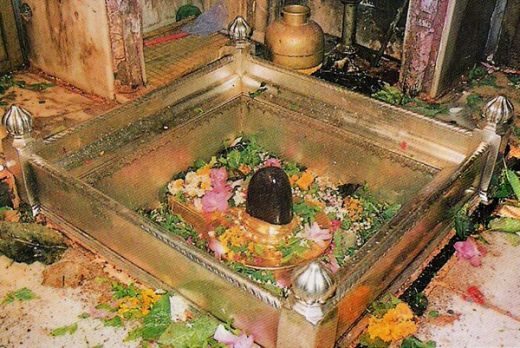
Baidyanath Jyotirlinga

Baidyanath Jyotirlinga temple, also known as Baba dham and Baidyanath dham is one of the twelve Jyotirlingas, the most sacred abodes of Shiva. It is located in Deoghar in the Santhal Parganas division of the state of Jharkhand, India. It is a temple complex consisting of the main temple of Baba Baidyanath, where the Jyotirlinga is installed, and 21 other temples.

According to Hindu beliefs, the demon king Ravana worshipped Shiva at the current site of the temple to get the boons that he later used to wreak havoc in the world. Ravana offered his ten heads one after the another to Shiva as a sacrifice. Pleased with this, Shiva descended to earth and cured Ravana who was injured. As he acted as a doctor, he is referred to as Vaidhya ("doctor"). From this aspect of Shiva, the temple derives its name.

Difficulty in identifying location of Baidyanath Jyotirlinga

'Baidyanatham chithabhoomau' [sivmahapuran kotirudra samhita 1/21-24] is the ancient verse that identifies location of vaidyanth jyotirlinga. According to which Baidyantham is in 'chidabhoomi', which is the ancient name of Deoghar. While, the same part of text has variation by which, verse is 'paralyam vaidyanatham', i.e., Vaidyanatham is in Parli, Maharashtra.

Thus the three temples of,

    Baiydanath temple at Deoghar, Jharkhand,
    Vaijnath temple at Parli, Maharashtra and
    Baijnath temple at Baijnath, Himachal Pradesh    
    are claiming their shrines as 'real' jyotirlinga of Vaidyanath.

In Dwadasa jyothirlinga sthothram, Adi Sankaracharya has praised Vaidyanath jyothirlinga in following verses,

    Poorvothare prajwalika nidhane
    sada vasantham girija sametham
    surasuraradhitha padapadmam
    srivaidyanatham thamaham namami

This states that Vaidyanath jyotirlinga is located at Prajwalika nidhanam (meaning funeral place i.e., chithabhoomi) in the North-Eastern part of the country. Deoghar is far located in east compared to Parli which is in west central part of the country. Also Chidabhoomi indicates that, in olden days, this was a funeral place, where corpses are burnt and post-death ceremonies were performed. This place could have been a centre of tantric cults like Kapalika/Bhairava where Lord Shiva is worshipped significantly as smasan vasin (meaning, residing in crematorium), sava bhasma bhushita (meaning, smearing body with ashes of burnt bodies).

Interestingly, the same shrine of Vaidyanath is considered as on of 51 Shakti Peethas, where 'yoni peetham' of jyotirlinga itself is considered as the Shakti Peetha.

Legend

An 1870 watercolour showing worship of the Jyotirlinga in Deoghar

According to the stories narrated in the Shiva Purana, it was in the Treta yuga that the demon Ravana, king of Lanka, felt that his capital would not be perfect and free from enemies unless Mahadeva (Shiva) stays there forever. He paid continuous meditation to Mahadeva. Ultimately Shiva got pleased and permitted him to carry his lingam with him to Lanka. Mahadeva advised him not to place or transfer this lingam to anyone. There should not be a break in his journey to Lanka. If he deposits the lingam anywhere on the earth, in the course of his journey, it would remain fixed at that place forever. Ravana was happy as he was taking his return journey to Lanka.

The other gods objected to this plan; if Shiva went to Lanka with Ravana, then Ravana would become invincible and his evil and anti-vedic deeds would threaten the world.

On his way back from Mount Kailash, it was time for Ravana to perform sandya-vandana and he could not carry out sandya-vandha with Shiva linga in his hand and therefore searched for someone who could hold it for him. Ganesha then appeared as a sheperd who was rearing sheeps nearby. Ravana requested Ganesha pretending as shepherd to hold the linga while he completes sandya-vandana and also guided him not to place the linga on ground at any movement. Ganesh warned Ravana about leaving the linga on the bank of the river and walking away if he doesnot return soon. Ganesha, pretending to be vexed by Ravena's delay, set the linga down on earth. The moment linga was kept down, it got fixed to the ground. When Ravana after returning from sandya-vandana tried to move the linga, but he could not. Ravan failed miserably in his attempt to uproot the linga. The Gods were happy with Shiva linga not reaching Ravana's place.
Shravan Mela

More than a million pilgrims visit this shrine every year. It is famous for the mela of Shraavana (a month of the Hindu calendar), between July and August. About 7 to 8 million devotees visit the place from various parts of India and offer holy water of Ganges to the deity collected from Sultangunj, which is almost 105 km from Deoghar. An unbroken line of people in saffron-dyed clothes stretches over the full 104 km for the month. The pilgrims are called Dak Bam and they do not stop even once in their journey from Sultangunj, located near Bhagalpur to Vaidyanath. Pilgrims to the temple later visit the Basukinath temple.

1)Baiydanath temple at Deoghar, Jharkhand

Vaidyanath Temple, also called Vaijnath Temple and Baidyanth Temple is located at Deogarh in the Santal Parganas region of Bihar in the south west of Keeul Station. Baidyanath shrine is revered as one of the twelve Jyotirlingams of Shiva. It may be noted that some schools of thought believe Vaidyanath near Parali in Andhra Pradesh to be the Vaidyanatha Jyotirlingam.

Devotees of Lord Shiva believe that by sincere worship of Vaijnath Jyotirlinga a person is relieved of all worries and miseries in life. It is also said that by worshipping in the shrine a person attains Moksha and all types of happiness. As a tradition, devotees carry ‘Kanwars’ on their shoulders and complete their travel here.

Legend Behind Vaidyanath Temple

Legend has it that demon King of Lanka, Ravana meditated upon Lord Shiva, as he wanted to request him to come over to Sri Lanka and make his capital invincible. It is said that Ravana attempted to lift Mount Kailash and take it with him to his capital. However, Lord Shiva crushed it with his finger. Ravana prayed to him and sought his mercy, after which Bhagwan Shiva gave him one of the twelve Jyotirlingams on the condition that if it were placed on the ground it shall fix itself to the ground and shall remain there for eternity. Ravana thanked Lord Shiva and holding the Linga carefully started of to the Lanka. However, Varuna the God of Water, entered his belly and caused him to feel an urgent need to relieve himself. Vishnu then came down in the form of a lad and volunteered to hold the Jyotirlingam as he relieved himself. Before Ravana returned, Vishnu placed the Jyotirlingam on the ground and it became rooted to the spot. A disappointed Ravana offered severe penance to Shiva here, and cut off nine of his heads. Shiva revived him and joined the heads to the body, as if by the work of a Vaidya or a physician, hence this Jyotirlingam goes by the name Vaidyanath.

According to another legend, Vaidyanath is one of the 52 Shakti Pitha shrines of Sati. It is believed that the heart of Sati fell here, when her half burnt body being carried by Shiva at the end of Daksha's Yagna was chopped to pieces by Vishnu's discus.

Some people believe that this temple was re-discovered by a cowherd Baiju and hence named Baijnath.

Structure of Vaidyanath Jyotirlinga

Vaidyanath Temple at Deogarh houses a spacious courtyard bound by stone walls. In the temple complex are twenty-two other temples. The Baijnath or Vaidyanath temple faces east. The top of the Shiva Lingam is slightly broken, keeping with the legend that it chipped away when Ravana tried to uproot it. Near the temple is the Shivaganga Lake.

2)Vaijnath temple at Parli, Maharashtra


Yogeshwari of Ambejogai was married to Lord Vaidyanatha of Parali. But by the time the marriage party reached, the auspicious time of the wedding had passed. As a result the people of the marriage party turned into stone statues. Yogeshwari was waiting away from Parali. This is one story that is frequently heard there.
When the Gods and Demons made their combined effort in Amrit Manthan (Churning for Nectar), fourteen gems emerged. There were Dhanwantari and Amrit Ratnas in it. When the Demons rushed to grab Amrit, Lord Vishnu hid the Amrit and Dhanwantari in the Shiva Linga of Lord Shankara. Just as the Demons tried to touch the Linga, flames started emanating from the Linga. The scared Demons ran aay. But when devotees of Lord Shankara touched the Linga, there was a free flow of Amrit from the same. Even today, devotees touch the Shiva Linga as a part of taking Darshan. Here, there is no discrimination between caste, creed or color. Anyone can come and visit this place. As the Lingamurthy is supposed to have Amrit and Dhanvantari, it is also known as Amriteshwar and Dhanvantari.
“Vaidyabhyam Poojitam Satyam, Lingametat puratamam
Vaidyanathamiti prakhyatam Sarvakamapradayakam”.
The mountains and jungles and the rivers, are full of useful medicinal herbs. That is why Parali JyotirLinga is also known as Vaidyanatha.
It is here that Lord Vishnu successfully helped the Devas to obtain Amrit. Therefore, this place is also known as ‘Vaijayanti”.
Once the Demon King Ravana went to Kailasa mountain and did a severe penance to please Lord Shankara. Put up with cold, heat, rains and fine and even then when Lord Shiva did not appear before him, he began to cut his head off in order to offer it to the ShivaLinga. Then the Lord appeared after Ravana tried to offer his tenth head. He restored all of Ravana’s heads and granted him boons. Ravana expressed his desire to take Lord Shiva to Lanka as a boon. He said, “I want to take you to Lanka”. Shankara, who is very soft hearted to His devotees, agreed to accompany Ravana to Lanka. He told Ravanan, “You must carry my Linga with care and devotion, but do be careful not to put it down on the earth until you reach your destination, or else, it will stay at whichever place you put it down” Shiva cautioned.
Ravana began the journey homeward carrying the Shivaling. On the way, he wanted to relieve himself by urination. He bid a cowherd boy to hold the Linga while he relieved himself. The cowherd was not able to bear the weight of the Linga and when he could no longer hold it, he put it down on the earth. And the Shiva Linga put there stayed as Lord Shiva already ordained and came to be known as Vaidyanatheswar.
Here, the gods were sad about Ravana taking away Shiva to his Lanka. They requested saint Narada to do something. Narada met Ravana and said to him by way of praising his penance and Tapas. “You made a mistake in trusting Shiva. Believing Shiva’s word was wrong. Go to him and slander him and get your way. Go to Kailasa and move it entirely. Your success will be gauged by your art of moving Kailasa from there”. Ravana was tricked into believing Narada. Ravana promptly carried out Narada’s bidding. Lord Shiva saw the ego driven mischieves rAvaNa and told him: “A unique power is soon going to born which will destroy your pride in the strength of your arms”. Narada informed the Gods of these tidings and his success in his mission. The gods were relieved and were happy. In the meanwhile, Ravana too was happy with the boon he received from Lord Shiva. He returned and was in a trance and was under the influence of Shiva’s mythical power. He was heady and drunk with power. He decided to conquer the entire universe. To subdue his ego only God had to descend on the earth in the Avatar of Rama. 

Recent developments in Parli Vaidhyanath

Near Parali Village, the temple is built with stones on a high mound. The temple is surrounded on all four sides by strong walls. The insides have corridors and a courtyard. Outside the temple there is huge Deep Stambh or pillar. The main gate or the Mahadwar has a Minaret nearby. It is called a Prachi or Gawaksha, i.e., window. With the help of the location of these special prayers are held for Sun God, based on the sunrays falling through these windows, directly on to the Lingamurthy.
There is a strong, wide staircase to enter the Temple. It is called ‘Ghat’. The old Ghat was built in the year 1108. 

The inner portal of the temple and the court hall are both of the same size. Therefore, the deity’s Darshan has to be done from the courtroom itself. No other place has this type of arrangement. At other places, the inner portal or the Garbhagriha is visually deep. 

The Lingamurty at Vaidyanath is made of Shaligram stone. It is beautiful and very smooth and is in a benevolent attitude. On all the four sides of the temple, Nanda Deeps (lights) keep burning.
Vaidyanath temple was renovated in the year 1706 AD, by Shiva devotee Ahalyadevi Holkar. She obtained some special stones from the nearby mountain range of Trishula Devi range, which is close to Parali. This place was Ahalyadevi’s favorite. 

Late Nanarao Deshpanda built the wonderful court hall of the temple. The artisans were brought from the village and with the help of the devotees. A Rama Rajeshwar Mahadev Temple too is built in memory of them near to the Vaidyanath temple. With in the premises of the Vaidyanath temple itself, there are eleven more temples for Shiva. The Veerashaiva Lingayats consider Vaidyanath Temple as the best.
Srimant Pershwa donated a large piece of land as an endowment to the temple commission. Today this establishment works through a committee. Several auspicious events are arranged here. Travelers can stay here in comfort. 

Just as Parali is a place of pilgrimage for Shiva devotees, it is also a meeting point for Hari Hara. In this mixed holy place, Lord Krishna’s festivals too are celebrated along with Lord Shankara’s festivals, with great festivity. The water from the Harihar Teerth is brought for the daily worship of Vaidyanath. Every Monday devotees gather here in great numbers. 

On Chaitra Padva, Vijayadashani, Tripuri Pournima, Maha Shivaratri and Vaikunth Chaturdashi, big celebrations take place. During these celebrations, there is no distinction between Bel and Tulsi. Mahadev is offered Tulsi leaves and Vishnu is offered Bel leaves. This unique practice is seen only in Vaidyanath. During the rainy season (Sravan) worship of Vaidyanath, the entire area of Parali echoes with the chanting of Rudrabhisheka Mantrochchar. The regular Puja is also done with great devotion and dedication. 

Markandeya, obtained his boon of life here in Parali from Vaidyanatha. This story is from Shivapuran, Markandeya was not blessed with a long life. Yama wanted to take his life in accordance with the time of Markandeya’s life. But Shiva released him from imminent death and from Yama. A pond is named after him. It is here that this happened. 

The story of Satyavan and Savitri too is based in Parali this holy place. On the Narayan mountain, the Vata Vriksh or Banyan tree of Savitri’s story, is still here to be seen. There is a temple of Vateshwara there.
King Sriyal and Queen Changuna’s dear son Chilia, came to life due to the kindness of Lord Shiva in Parali Vaidyanath. 

Lord Ganesha’s idol without the usual trunk and in a sitting posture like a body builder can be seen here.
Great saints like Vakrebua, Dhundiraj, Yamaraj, Vishweswar, Guru Lingaswamy lived here. Their holy touch has made Parali even holier. It is a place of pride for Maharashtra.
“Vaidyanatheswaram NaamnaatalLinga Bhavamukheta
Prasiddham Trishulokeshuh Bhuktimukti pradamsataam
JyotirLingamidam sreshtam Darshant Poojanaadapi
Sarvapapaharam Divyam Bhuktivardhana muttamam
Maanusham durlabham Praanya Vaidyanathasya Darshanam
Na Karoti naro yastu Janma nirardhakam”.

 Location of Vaijnath temple at Parli

If one is to draw a line between Kanyakumari and Ujjain, Parali village can be clearly seen on that line. This village is located on the slopes of Meru or Naganarayana Mountain. Parali is an ancient village located near three rivers, Brahma, Venu and Saraswati, because of the presence of one of the twelve JyotirLingas of Shankara, it has become famous. This village is also known as Kantipur, Madhyarekha Vaijayanti or Jayanti. It is 26 kilometers from Ambejogai in the Beed district. 

3)Baijnath temple at Baijnath, Himachal Pradesh

 Baijnath is a town in Kangra district of Himachal Pradesh. It is about 50 kilometres from Dharamshala which is the district headquarters.The very famous ancient temple of Lord Shiva (Baijnath) is situated here which is believed to be one of twelve jyotirlingas according to popular legends also giving the town its name .

Geography

Baijnath is located at 32.05°N 76.65°E.[1] It has an average elevation of 1,314 metres (4,311 feet). It is a small township in the Dhauladhar range of western Himalayas, 16 km from Palampur in the Kangra District of Himachal Pradesh

History

Baijnath is famous for its 13th century temple dedicated to Shiva as Vaidyanath, ‘the Lord of physicians’. Originally known as Kiragrama, the town lies on the Pathankot-Mandi highway (National Highway No. 20) almost midway between Kangra and Mandi. The present name Baijnath became popular after the name of the temple. The town is located on the left bank of the river Binwa, a corrupt form of ancient Binduka, a tributary of river Beas.

The Baijnath temple has been continuously under worship ever since its construction in 1204 A.D. by two local merchants named Nitin soni and Shishir soni(Paprola). The two long inscriptions in the porch of the temple indicate that a temple of Shiva existed on the spot even before the present one was constructed. The present temple is a beautiful example of the early medieval north Indian Temple architecture known as Nagara style of temples. The Svayambhu form of Sivalinga is enshrined in the sanctum of the temple that has five projections on each side and is surmounted with a tall curvilinear Shikhara. The entrance to sanctum is through a vestibule that has a large square "Mandapa" in front with two massive balconies one each in north and south. There is a small porch in front of the mandapa hall that rests on four pillars in the front preceded by an idol of "Nandi", the bull, in a small pillared shrine. The whole temple is enclosed by a high wall with entrances in the south and north. The outer walls of the temple have several niches with images of gods and goddesses. Numerous images are also fixed or carved in the walls. The outer doorway in the porch as also the inner doorway leading to the sanctum of the temple are also studded with a large number of images of great beauty and iconographic importance. Some of them are very rare to be found elsewhere.

The temple attracts a large number of tourists and pilgrims from all over India and abroad throughout the year. Special prayers are offered in the morning and evening every day besides on special occasions and during festive seasons. Makara Sankranti, Maha Shivaratri, Vaisakha Sankranti, Shravana Mondays, etc. are celebrated with great zeal and splendour. A five day state level function is held here on Maha Shivratri every year.


The main attraction of Baijnath is an ancient temple of Shiva. Neighbouring towns are Palampur Kangra and Joginder Nagar in Mandi district. According to the legend, it is believed that during the Treta Yug, Ravana in order to have invincible powers worshiped Lord Shiva in the Kailash. In the same process, to please the almighty he offered his ten heads in the havan kund. Influenced by this extra ordinary deed of the Ravana, the Lord Shiva not only restored his heads but also bestowed him with powers of invincibility and immortality.

On attaining this incomparable boon, Ravana also requested Lord Shiva to accompany him to Lanka. Shiva consented to the request of Ravana and converted himself into Shivling. Then Lord Shiva asked him to carry the Shivling and warned him that he should not place the Shivling down on the ground on his way. Ravana started moving south towards Lanka and reached Baijnath where he felt the need to answer the nature’s call. On seeing a shepherd, Ravana handed over the Shivling to him and went away to get himself relieved. On finding the Shivling very heavy, the shepherd put the linga on the ground and thus the Shivling got established there and the same is in the form of Ardhnarishwar (God in form of Half Male & Half Female).

In the town of Baijnath, Dussehra festival in which traditionally the effigy of the Ravana is consigned to flames,celebrated all over the country is not celebrated as a mark of respect to the devotion of Ravana towards Lord Shiva. Another interesting thing about the town of Baijnath is that there are no shops of goldsmiths here .

Another version  also suggests that while Ravana was descending from the Himalayas with the Shivling Lord Shiva had awarded him after years of worship which was supposed to be established at Lanka, now Sri Lanka, which would have blessed him (Ravana) with undefeatable powers even to the Gods which was not to be placed anywhere during the course of travel, even during resting, Ravana was tricked by one of the Devas (Gods), who posed as a beggar and wanted help from Ravana and promised to hold the Shivling for him while he (Ravana) could fetch some food for the beggar. The Deva posing as beggar placed the Shivling on ground, in absence of Ravana. The Shiva idol or the Shivling at Baijnath temple is the same Shivling which was placed by the Deva after tricking Ravana.

History: The history of the ancient Baijnath Temple is hazy and the two long inscriptions fixed in the walls of the mandapa of the temple gives us account of the temple. The temple was built in Saka 1126 (CE 1204)by two brothers Manyuka and Ahuka in devolution to Lord Vaidyanatha. The inscriptions tell us that a Sivalinga known as Vaidyanatha already existed on the spot but was without a proper house so the present temple and a porch in its front was constructed. British Archaeologist Alexander Cunningham noticed an inscription of 1786 in the temple referring to its renovations by king Sansara Chandra. An inscription on the wooden doors of the sanctum of the temple provides the date as samvat 1840 (AD 1783) that is very near to Cunningham’s date. The devastating earthquake that shook the entire region of Kangra on 4 th April 1905 also caused damage to the shrine, which has been reported by J. Ph. Vogel and has since been repaired. At present the temple is a protected monument under the Archaeological Survey of India but the performance of worship and rituals are under a local board at Baijnath with SDM as its chairman. The hereditary priests continue to get a share of the offerings.

How to Reach

Besides the main temple there are several other shrines which are of equal importance for the local residents. Some of them are Mukut Nath temple at Sansal (6 km)and the Mahankal Temple on Chobin Road.

The town offers splendid views of the Dhauladhar Ranges and numurous mountain streams.

Tibetan Monasteries at Sherabling (Bhattu)(5 km),Chauntra and Chowgan on the Mandi Highway and at Bir(14 km).

Billing(28 km) is an international paraglding site which is considered as one of the best in the world for paragliding and other aerosports .The site has been the host to international events such as the Paragliding Pre-World Cup multiple times and other national and international events.
Read more...

Grishneshwar Jyothirling

0 comments
Grishneshwar Jyothirling

Grishneshwar, also known as Ghushmeshwar, is a famous Hindu temple dedicated to Lord Shiva and is one of the twelve Jyotirlingas, the sacred abodes of Shiva. The temple is located eleven km from Daulatabad, near Aurangabad in Maharashtra India. The temple is located near the famous Ellora Caves.

The Temple

The Grishneswar temple was re-constructed by Maloji Bhosale of Verul, (grandfather of Chhatrapati Shivaji Maharaj) in the 16th century and later by Ahilyabai Holkar in 18th century, who also re-constructed the Kashi Vishwanath temple at Benares, and the Vishnupad Mandir at Gaya.
Pilgrimage

Grishneshwar is an ancient pilgrimage site revered as the abode of one of the 12 Jyotirlingas of Shiva. It is located at a distance of 11 km from Daulatabad near Aurangabad in Maharashtra. Daulatabad was once known as Devagiri. Located nearby are the popular tourist attractions Ellora - featuring ancient rock cut monuments from the 1st millennium CE, and Ajanta known for its exquisite cave paintings again from the 1st millennium CE.

The Grishneswar temple was constructed by Ahilyabhai Holkar who also re-constructed the Kashi Viswanatha temple at Benares and the Vishnu Paada temple at Gaya. Grishneshwar is also known as Ghushmeshwar.

Sthala purana of Grishneshwar Jyotirlinga

Once the king went hunting. While hunting, the king killed the animals living with the Rishis and munis too. Seeing this, the irate Saints cursed the king, as a result of which, his entire body was infested with insects.

Now, smitten by this curse, the king began to wander in the forest. His throat was parched because he was very thirsty. There was, alas, no water to be found anywhere. At last he found a water hole made by the hooves of a horse. Just as the king started to drink water a miracle occurred. The king’s body was rid of all the insects. The king did severe penance (Tapa) there. Lord Brahma was pleased and appeared before him and installed Parashta Teerth there. He also created a huge and holy lake near by.

This Brahma sarovar later came to be known as Shivalay.

There is a story about Shivalay also:

Once Shiva and Parvati were playing chess on Mount Kailasa. Paravti checkmated Shiva. Shankara played to be angry at this and went away southward. He went and stayed at a place on the Sahyadri range, where there is cool breeze. This place was given the name of Maheshamauli Bhainsmal. Parvati came there looking for Shankar. She won the heart of Shiva in the form of a hill mountain tribal girl. They both spent some time there happily.

This forest came to be known as Kamyakavana. Lord Mahesha forbade crows from entering the area of Maheshamouli or Bhainsmal. One day, Paravti was very thirsty. Shankara pierced earth with his trident and got the water of Bhogavati from the Patal (Nether world). This is the Shivalay.
Grishneshwar Jyotirlinga Temple, Ellora, Aurangabad

The Shivalay expands a little ahead where Shivanadi (Shivanand) meets it and a little more further, Yelaganga also flows just near it. When Shiva and Parvati were staying here pleasently, a hunter by the name Sudhanwa came there looking for a prey. A miracle happened and Sudhanwa turned into a woman. At this he did a severe Tapa there. Shankara was pleased and appeared. Actually, Sudhanwa was a woman by birth in his previous life. Thus, Shankara from that very curse of becoming a woman turned Sudhanwa into Yelaganga river. Thus, Punya Sarita Yelaganga was born in the Kamyawana. Later, it was to become the bathing place called Dhara Teerth or ‘Sita’s Snangriha’ and flow from a higher place and goes through Verul village.

Once Parvati, was about to fill her hair parting with vermillion and saffron, in Kamyavana. She kept them in her left palm and mixed the water of Shivalay in it. With the right thumb she started mixing them both. Then a miracle occurred, vermillion turned into a ShivaLinga and a great light appeared in it. Parvati was awe struck at this. Then Lord Shankara said: “This Linga was hidden in the Patala.” And removed it with his trident.

Then a bubble emerged from the earth with water (Kashikhand).

Parvati kept that glorious light in stone Linga and installed it there. This Purna (complete) JyotirLinga is called Kunkumeshwar. But since Dakshayani created this Linga with the function of her thumb. She gave it the name of Grishneshwara (Grishna means friction).

On the southern mountain called Deva Parvata, a great scholar Brahmin Sudhama of Bharadwaja gotra, used to live with his beautiful, devout wife called Sudeha. They had no children. They were very unhappy because of this. They were harassed and tortured by the sly remarks of their neighbours. But Sudhama, an intelligent person, did not care about these. One day, Sudeha threatened to commit suicide and sister Dushma, married her husband. Both of them promised that there would be no jealousy between them.

After sometime, Dushma gave birth to a son. And eventually even that son married. Both Sudhama and Dushma, were nice to Sudeha. But jealousy did get the better of Sudeha. Once she picked up Dushma’s son who was sleeping by her side and killed him. She threw the body into the lake near by.

In the morning there was a big hue and cry. Dushma’s grief knew no bounds. Even then, she went to the river to do her routine worship. She made her usual hundred Lingas and began worship she saw her son standing near the lake. Shiva was pleased with her worship and revealed the truth about Sudhas forgiveness of Sudha’s sin. She indeed requested Shiva to remain there itself for the welfare of the humanity.

Shiva acceded to her request and remained there with the name of Dhushamesha.
History of the Grishneshvar Temple

The very devout Shiva devotee, Bhosale (The Patel or chief of Verul) once found a treasure hidden in the snake pit (ant hill) by the grace of Lord Grishneshwar. He spent that money to renovate the temple and built a lake in Shikharshinganapur.

Later on, Goutamibal (Bayajabai) and Ahilyadevi Holkar renovated the Grishneshwar temple. This 240ft x 185 ft temple is still there strong and beautiful as ever. Halfway up the temple, Dashavataras are carved in red stone. These are beautiful to look at. There are also other beautiful statutes carved out. A court hall is built on 24 pillars. On these pillars there are wonderful carvings. The scenes and paintings are beautiful. The Garbhagriha measures 17ft x 17 ft. The Lingamurty faces eastward. There is a gorgeous Nandikeshwara in the court hall.


Legend

Legend has it that a devout woman Kusuma offered worship to Shiva regularly by immersing a Shivalingam in a tank, as a part of her daily ritual worship. Her husband's first wife, envious of her piety and standing in society murdered Kusuma's son in cold blood. An aggrieved Kusuma continued her ritual worship, and when she immersed the Shivalingam again in the tank, her son was miraculously restored to life. Shiva is said to have appeared in front of her and the villagers, and then one is believed to have been worshipped in the form of a Jyotirlinga Ghusmeshwar and also known as Kusumeshwar Jyotirlinga.

 Grishneshwar jyotirlinga location

“Blessed by VerulNagar, there is no other place like it on this earth, where Lord Grishneswara resides, the best palce on this earth.” – Madhwamunishwar

On this holy pilgrimage of the JyotirLingas of Lord Shankara, the last one, with out which the pilgrimage will not be considered as complete, is the twelfth JyotirLinga, of Grishneshwar.

About 30 km towards the west side of Aurangabad, there is a village called Verul. In this village there is a place of pilgrimage called Shivalay, when the great Holy Trilinga of Ghrishneshwar is located. The stories associated with Verul, Shivalay and Ghrishneswar are like this:

This was originally a settlement of the Naga tribes. The place of the Nagas is Bambi, which is known as “Varul” in Marathi “Varul” gradually changed into “Verul” and is known by this name only. River Yelaganga flows here. The name “Verul” is derived from Yelaganga, on whose banks the village is located. There was a king by the name “Yela” here. The capital of his kingdom was Yelapar, or Yelur or Verul.

Read more...

Rameswara Jyothirling

0 comments
                           Rameswara Jyothirling

Ramanathaswamy Temple is a famous Hindu temple dedicated to god Shiva located in the island of Rameswaram in the state of Tamil Nadu, India. It is one of the 275 Paadal Petra Sthalams, where the three of the most revered Nayanars (Saivite Saints), Appar, Sundarar and Tirugnana Sambandar have glorified the temple with their songs. The temple was built during the 12th century by Pandya Dynasty . The temple has the longest corridor among all Hindu temples in India. The temple is located in Rameshwaram, an island town in South India, considered a holy pilgrimage site for Shaivites, Vaishnavites and Smarthas. The Temple is also one of the 12 Jyothirlinga temples, where Shiva is worshipped in the form of a Jyotirlingam meaning "pillar of light".

According to Puranas


According to Ramayana, Rama, the seventh incarnation of God Vishnu, is believed to have prayed to Shiva here to absolve any sins that he might have committed during his war against the demon king Ravana in Srilanka.[citation needed] To worship Shiva, Rama wanted to have the largest lingam. He directed Hanuman, the monkey lietunant in his army to bring the lingam from Himalayas. Since it took longer to bring the lingam, Sita (the wife of Rama) built a small lingam, which is believed to be the lingam in the sanctum.


The Temple


The primary deity of the temple is Ramanathaswamy (Shiva) in the form of lingam. There are two lingams inside the sanctum - one built by Sita residing as the main deity, Ramalingam and the one brought by Hanuman from Kailash called Vishwalingam. Rama instructed that Vishwalingam should be worshipped first since it was brought by Hanuman - the tradition continue even today.

Like all ancient temples in South India, there is a high compound wall (madil) on all four sides of the temple premises measuring about 865 feet furlong from east to west and one furlongs of 657 feet from north to south with huge towers (Gopurams) at the east and west and finished gate towers on the north and south. The temple has striking long corridors in its interior, running between huge colonnades on platforms above five feet high.

The second corridor is formed by sandstone pillars, beams and ceiling. The junction of the third corridor on the west and the paved way leading from the western gopuram to Setumadhava shrine forms a unique structure in the form of chess board and it is popularly known as Chokkattan Madapam where the Utsva deities are adorned and kept during the Vasntotsavam (Spring festival) and on the 6th day festival in Adi (July–August) and Masi (February–March) conducted by the Setupati of Ramnad.

The outer set of corridors is reputed to be the longest in the world being about 6.9 m height, 400 feet in each in the east and west and about 640 feet in north and south and inner corridors are about 224 feet in east and west and about 352 feet each in north and south. Their width varies from 15.5 feet to 17 feet in the east and west about 172 feet on the north and south with width varying 14.5 feet to 17 feet.The total length of those corridors is thus 3850 feet. There are about 1212 pillars in the outer corridor. Their height is about 30 feet from the floor to the center of the roof. The main tower or rajagopuram is 53 m tall.[citation needed] Most pillars are carved with individual composition.

Shrines in the temple complex and around Rameshwaran

There are separate shrines for God Ramanathaswami and Goddess Visalakshi separated by corridor.
There are separate shrines for Parvathavardhini, Utsava Idols, Sayanagriha, Perumal, Santanaganpathi, Mahaganapathi, Subrahmanya, Sethumadhava, Mahalaxmi, Natraja, Anjaneya. There are various halls inside the temple, namely Anuppu Mandapam, Sukravara Mandapam, Sethupathi Mandapam, Kalyana Mandapam and Nandi Mandapam.Jyotirlingas

 
Tirthas of Rameswaram

There are sixty-four Tīrthas (holy water bodies) in and around the island of Rameswaram, Tamil Nadu, India. According to Skānda Purāṇa, twenty-four of them are important. Bathing in these Tīrthas is a major aspect of the pilgrimage to Rameswaram and is considered equivalent to penance. Twenty-two of the Tīrthas are within the Rāmanāthasvāmī Temple. The number 22 indicates the 22 arrows in Rama's quiver. The first and major one is called Agni Theertham, the sea (Bay of Bengal).
Significance

Char Dham

Adi Sankara, the Guru of Advaita, who is believed to have started the Char Dhams
The temple is one of the holiest Hindu Char Dham (four divine sites) sites comprising Badrinath, Puri and Dwarka. Though the origins are not clearly known, the Advaita school of Hinduism established by Sankaracharya, who created Hindu monastic institutions across India, attributes the origin of Char Dham to the seer.[citation needed] The four monasteries lie across the four corners of India and their attendant temples are Badrinath Temple at Badrinath in the North, Jagannath Temple at Puri in the East, Dwarakadheesh Temple at Dwarka in the West and Ramanathaswamy Temple at Rameswaram in the South. Though ideologically the temples are divided between the sects of Hinduism, namely Saivism and Vaishnavism, the Char Dham pilgrimage is an all Hindu affair. There are four abodes in Himalayas called Chota Char Dham (Chota meaning small): Badrinath, Kedarnath, Gangotri and Yamunotri - all of these lie at the foot hills of Himalayas.[citation needed] The name Chota was added during the mid of 20th century to differentiate the original Char Dhams.[citation needed] The journey across the four cardinal points in India is considered sacred by Hindus who aspire to visit these temples once in their lifetime. Traditionally the trip starts at the eastern end from Puri, proceeding in clockwise direction in a manner typically followed for circuambulation in Hindu temples.

Historical pilgrimage

The temple is one of the famous pilgrimage sites and there are historical references about it. The Maratha kings who ruled Thanjavur established chatrams or rest houses all through Mayiladuthurai and Rameswaram between 1745 and 1837 CE and donated it to the temple.

Temple contributions and donations from Hindu kings and zamindars

The temple in its current shape is believed to have been built during the 17th century, while Fergusson believes the small vimana in the west corridor belonging to the 11th or 12th centuries. The contribution of the kings of the Sethupathy dynasty to the temple was considerable. Especially to be remembered are the immense sums that were spent during the tenure of Pradani Muthirulappa Pillai towards the restoration of the Pagodas which were falling into ruins, the splendid Chockattan Mantapam or the cloistered precincts of the temple at Rameshwaram that he finally completed. The rulers of Sri Lanka contributed to the temple - Parakrama Bahu (1153-1186 CE) was involved in the construction of the sanctum sanctorum of the temple. The temple was repaired and substantial portions reconstructed by the Nagarathars of Devakottai, especially Shree AL.AR.RM.Arunachalam chettiar, then Zamindar of Devakottai,He was the Hereditary Trustee of RamanathaSwamy Temple.There after his son AL AR Kalairajah Chettiar,subsequently his son AL AR K Veerappa Chettiar are Hereditary Trustees of Rameswaram RamanathaSwmy Temple.
In News

The temple priests are Mahastra Brahmins who get Diksha from Sringeri Mutt. Shortage of priests has been reported as there are 5 priests to manage the 13 shrines within the temple. The shortage is more pronounced during the 12 day Mahasivarathri festival when the festival deities of the temple are taken in procession. The temple comes under the renovation and consecration of the 630 temples planned to be renovated by the Hindu Religious and Charitable Endowment Department of the Government of Tamil Nadu. The temple authorities have planned to renovate and widen the pathways to the 22 holy theerthams of the temple. The consecration of the temple is planned during 2013. The temple is one of the temples offering Free meal scheme of the government, which provides meals to devotees of the temple. A pilgrim house is planned by the government to extend the scheme to more pilgrims.

Read more...

Nageshvara Jyotirling

0 comments
Nageshvara Jyotirlinga

Nageshvara Jyotirlinga is one of the 12 Jyotirlinga shrines mentioned in the Shiva Purana (Śatarudra Saṁhitā,Ch.42/2-4, referred as "nagesham darukavane"). Nageshvara is believed as the first Jyotirlinga on the earth. There are three major shrines in India which are believed as identical to this Jyotirlinga. Those are the Jageshwar temple near Almora in Uttarakhand state, the Nageshwara temple near Dwaraka in Gujarat state and the Nagnath temple in Aundha in Maharashtra state.

According to puranas

The Shiva Purana says Nageshvara is in the Darukavana, which is an ancient epic name of a forest in India. Darukavana finds mention in Indian epics like Kamyakavana, Dvaitavana, Dandakavana,etc.
According to a narrative, the Balakhilyas, a group of dwarf sages worshipped Shiva in Darukavana (Dwarka - Van means Forest of Dwarka) for long time. To test their devotion and patience, Shiva came to the Darukavana as an digambara (nude) ascetic, wearing only Nagas[serpants] in his body. Wives of sages were attracted and ran after the ascetic, leaving back their husbands. Sages got very disturbed and frustrated with this. They lost their patience and cursed ascetic to loose his linga. Shivalinga fell on the earth and whole world trembled. Brahma and Vishnu came to Shiva, requested him to save earth from destruction and take back his linga. Shiva consoled them and took back his linga.(Vamana Purana Ch.6 and 45)
Shiva promised his divine presence in Darukavana as Jyotirlinga for ever. Later Darukavana became favourate place of Nagas and Vasuki worshipped Shiva here for long and there after the Jyotirlinga came to be known as Nagnath or Nageshvara.

Also, there is a narrative in the Shiva Purana on the Nageshvara Jyotirlinga. It says, a demon named Daaruka attacked a Shiva devotee by name Supriya and imprisoned her along with several others in his city of Darukavana. This place was a city of snakes and Daaruka was the king of the snakes. On the insistence of Supriya, all the prisoners started to chant the holy mantra of Shiva and instantly Lord Shiva appeared and vanquished the demon and later started to reside here in the form of a Jyotirlinga.

It is also said that a demoness 'Daaruka' and worshiped Mata Parvati. Pleased with the great penance and devotion of Daruka, Mata Parvati gave her a boon that she would be the queen of the forest(where she meditated) and the forest would be called 'DARUKAVANA'. Devi Parvati gave her the power to shift the forest.To save denoms, Daruka used her special powers she had got from godess Parvati. She shifted the entire forest into the sea. From here they continued their operation against hermits. They used to kidnap sages and kept them in their new place. Once they captured a great Shiva devotee, Supriya.

Arrival of Supriya changed the situation. He made all captives recite powerful Om Namaha Shivay mantra of Lord Shiva. Taking this as a rebellion, demons decided to kill Supriya, but they failed as Lord Shiva appeared there and saved him. Daruka realized her mistake. Then Shiva and Parvati stayed there. Lord Shiva once again assumed the form of Jyotirlinga with the name Nageshwar and Goddess Parvati was known as Nageshwari. Lord Shiva said that he will show the correct path to one's who will worship him.
Controversy about the location

At present, there is a debate on location of epic forest Darukavana so as to identify the jyotirlinga of Nageswaram. Since no other important clues are left in the text which help in locating the place, 'Darukavana' remains as the vital clue.

Darukavana, the name being derived from 'daruvana' [meaning forest of deodar trees], is taken by many to exist in Almora. Deodar (daru vriksha) is found only in western Himalayas in abundance and is not found in peninsular India. There has been a continuous association of deodar trees with Lord Shiva in ancient Hindu texts. Hindu sages used to reside and perform meditation in deodar forests to please Lord Shiva. Also, according to the ancient treatise Prasadmandanam,

"हिमाद्रेरूत्तरे पार्श्वे देवदारूवनं परम् पावनं शंकरस्थानं तत्र् सर्वे शिवार्चिताः।"
Thus most identify the 'Jageswara' temple in Almora, Uttarkhand as Nageshvara Jyotirlinga.
The very name of Darukavana in text could be misread as 'Dwarakavana' to locate Jyotirlinga at Nageswara temple at Dwaraka. In fact there is no legendary forest at this part of dwaraka that finds mention in any of the India epics. In the narratives of Shri Krishna, we find mention of Somanatha and adjoining Prabhasa tirtha, but never there is any mention of 'Nageswara or Darukavana' in Dwaraka and outskirts.
'Darukavana' can also be taken to exist adjacent to Vindhya Mountains. It is south-southwest of the Vindhyas extending to sea in west. In the Dvadasha Jyotirlinga Stotra  Shankaracharya praised this Jyotirlinga as Naganath:

"Yamye sadange nagaretiramye vibhushitangam vividhaishcha bhogai Sadbhaktimuktipradamishamekam shrinaganatham sharanam prapadye"

This could be taken to provide evidence that it is located in the south ['yamye'] at the town of Sadanga, the ancient name of Aundh in Maharashtra located 'south' compared to Jageswara shrine in Uttarkhand and Dwaraka Nageshvara at West end.
Read more...

Trimbakeshwar Jyothirling

0 comments

                       Trimbakeshwar  Jyothirling

Trambakeshwar is an ancient Hindu temple in the town of Trimbak, in the Nashik District of Maharashtra, India, 28 km from the city of Nashik GPS Reference 19°55′N, 73°30′E. It is dedicated to Lord Shiva and is one of the twelve Jyotirlingas.

It is located at the source of the Godavari River, the longest river in peninsular India. The Godavari River, which is considered sacred within Hinduism, originates from Bramhagiri mountains and meets the sea near Rajahmudry. Kusavarta, a kund is considered the symbolic origin of the river Godavari, and revered by Hindus as a sacred bathing place. The current temple was built by Peshwa Balaji Baji Rao (a.k.a Nanasaheb).

Trimbakeshwar is a religious center having one of the twelve Jyotirlingas. The extraordinary feature of the Jyotirlinga located here is its three faces embodying Lord Brahma, Lord Vishnu and Lord Rudra. Due to excessive use of water, the linga has started to erode. It is said that this erosion symbolizes the eroding nature of human society. The Lingas are covered by a jeweled crown which is placed over the Gold Mask of Tridev (Brahma Vishnu Mahesh). The crown is said to be from the age of Pandavs and consists of diamonds, emeralds, and many precious stones. The crown is displayed every Monday from 4-5 pm (Shiva).

All other Jyotirlingas have Shiva as the main deity. The entire black stone temple is known for its appealing architecture and sculpture and is at the foothills of a mountain called Brahmagiri. Three sources of the Godavari originate from the Brahmagiri mountain.

Story related to Godavari river
Brahmadev worshipped God Trivikram when he came to Satya Loka (on earth) with the same holy water of the Ganges, to get the river Ganges held up by God Shankar on his head, to flow. There was a famine of 24 years and people were affected by the pangs of hunger. However, Varun - the God of Rains, pleased with Sage Gautama arranged rains every day in Gautama's Ashram (dwelling place) which was in Trimbakeshwar. Gautama used to sow rice in the surrounding fields of his Ashram in the morning, reap the crop in the afternoon and with it fed a large group of rishis, who took shelter in his Ashram on account of the famine. The blessings of the group of rishis increased the merit (Punya) of Gautama. Lord Indra's position became shaky because of his increased merit.


So Indra ordered clouds to rain all over Trimbakeshwar, so that the famine will be over and Rishis will go back and the increasing merits of Gautama will be weakened. Although the famine was over, Gautama urged the Rishis to stay back and kept on feeding them and gaining merit. Once he saw a cow grazing in the paddy field and he drove her away by throwing Darbha (sharp, pointed grass). The slender cow died by this. It was Jaya - Parvati's friend, who had taken the form of a cow. This news upset the Rishis and they refused to luncheon at his Ashram. Gautama requested Rishis to show a way out of this sin. He was advised to approach Lord Shiva and request him to release Ganges and a bath in the Ganges would set him free of his sins. Gautama then practiced penance by going to the peak of Brahmagiri. Lord Shankara was pleased by his worships and gave him the Ganges.

However, Ganges was not prepared to part with Lord Shiva, which irritated him. He made TandavNrutya (dance) on the peak of Brahmagiri and dashed his jata there. Frightened by this action, Ganges appeared on Brahmagiri. Later on Ganges appeared in the Trimbak Tirtha. Gautama praised her but she off and on appeared on the mountain at various places and disappeared in anger. Gautama could not bathe in her waters. Ganges then appeared in Gangadwar, Varaha-tirtha, Rama-Laxman tirtha, Ganga Sagar tirtha. Still Gautama could not bathe in her waters. The Gautama surrounded the river with enchanted grass and put a vow to her. The flow stopped there and the tirtha thus came to be called Kushavarta. It is from this Kushavarta that the river Godavari flows up to the sea. The sin of killing a cow by Gautama was wiped off here.

This place is famous for lots of religious rituals (vidhis). Narayan Nagbali, Kalsarpa Shanti, Tripindi vidhi are done here. Narayan Nagbali puja is performed at Trimbakeshwar only. This puja is performed in three days. This puja is performed on special dates. Some days are not suitable to perform this puja. This puja is performed for many reasons like to cure an illness, going through bad times, killing a Cobra (Nag), childless couples, financial crisis or you want to perform some religious puja to have everything.

Temple

 Trimbakeshwar town has a large number of Brahmin households and is also a centre for Vedic Gurukuls (kind of boarding school). It also has ashrams and Muths devoted to Ashtanga Yoga, the Hindu art of living.
The existing temple was built out of basalt after it was commissioned by Peshwa Nanasaheb. It so happens that the Peshwa made a bet on whether the stone surrounding the Jyotirlinga, is hollow from the inside or not. The stone was proved to be hollow, and on losing the bet, the Peshwa built a marvelous temple out of it. The Shiva deity of the temple consisted of the world famous Nassak Diamond. It was appropriated by the British in The Third Anglo-Maratha War and lies with one owner or the other ever since. The diamond presently lies with Edward J. Hand, a trucking firm executive from Greenwich, Connecticut, USA
The place is known for its scenic beauty in rainy/monsoon season and is surrounded by lush green hills untouched by pollution. Anjaneri mountain, the birthplace of Lord Hanuman, is 7 km from Trimbakeshwar.
Shri Nilambika/Dattatreya/Matamba Temple

This temple is on top of the Neel mountain. All goddesses ('Matamba','Renuka','Mananmba') came here to see 'Parashuram' when he was performing penance (tapas). After his penance he requested all goddesses to stay there and the temple was formed for these goddesses. God Dattatreya दत्तात्रेय (Shripad Shrivallabh) stayed here for some years.as well as neelkantheshwar mahadev ancient mandir is also situated right behind the Dattatrey temple. & in the feets of this Neel parvat :Annapurna ashram,renuka devi,khandoba temple is also here.

 
Read more...

Kashi Vishwanath jyothirling

0 comments
Kashi Vishwanath jyothirling

Kashi Vishwanath Temple  is one of the most famous Hindu temples dedicated to Lord Shiva and is located in Varanasi, the Holiest existing Place of Hindus, where at least once in life a Hindu is expected to do pilgrimage, and if possible, also pour the remains of cremated ancestors on the River Ganges. It is in the state of Uttar Pradesh, India. The temple stands on the western bank of the holy river Ganges, and is one of the twelve Jyotirlingas, the holiest of Shiva temples. The main deity is known by the name Vishwanatha or Vishweshwara meaning the Ruler of the universe. The temple town claims to be the oldest living city in the world, with 3500 years of documented history is also called Kashi and hence the temple is popularly called as Kashi Vishwanath Temple.

The temple has been referred to in Hindu theology for a very long time and as a central part of worship in the Shaiva philosophy. The temple has been destroyed and rebuilt a number of times. The Gyanvapi Mosque, which is adjacent to the temple, is the original site of the temple. The current structure was built by the Maratha monarch, Ahilya Bai Holkar of Indore in 1780. Since 1983, the temple is being managed by Govt. of Uttar Pradesh. During the religious occasion of Shivratri, Kashi Naresh (King of Kashi) is the chief officiating priest and no other person or priest is allowed to enter the sanctum sanctorum. It is only after he performs his religious functions that others are allowed to enter.

The temple structure

The original holy well - Gyanvapi in between the temple & Gyanvapi Mosque The temple complex consists of a series of smaller shrines, located in a small lane called the Vishwanatha Galli, near the river. The linga of the main deity at the shrine is 60 cm tall and 90 cm in circumference housed in a silver altar. There are small temples for Kaalbhairav, Dhandapani, Avimukteshwara, Vishnu, Vinayaka, Sanishwara, Virupaksha and Virupaksh Gauri in the complex. There is a small well in the temple called the Jnana Vapi (the wisdom well) and it is believed that the Jytorlinga was hidden in the well to protect it at the time of invasion. It is said that the main priest of the temple jumped in the well with the Shiv Ling in order to protect the (Jyoti-r) Ling from invaders.
The Kashi Vishwanath temple receives around 3000 visitors every day. At certain occasions, the numbers reach 100,000.

Importance of the temple

The temple is widely recognized as one of the most important places of worship in Hindu religion and most of the leading Hindu saints, including Adi Sankaracharya, Ramakrishna Paramhansa, Swami Vivekananda, Goswami Tulsidas, Swami Dayananda Saraswati, Gurunanak have visited this site. A visit to the temple and a bath in the river Ganges is one of many methods believed to lead one on a path to Moksha (liberation). Thus, people from all over the nation, try to visit the place at least once in their lifetime. There is also a tradition that one should give up at least one desire after a pilgrimage the temple, and the pilgrimage would also include a visit to the temple at Rameswaram in South India, where people take the water samples of the Ganges to perform prayer at the temple and bring back the sand from near that temple. Due to the immense popularity and holiness of this temple, hundreds of temples across the nation have been built with the same style and architecture. Many legends establish that the true devotee achieves freedom from death and samsara by worship of Shiva. Shiva's devotees on death are directly taken to Mount Kailash by his messengers to his abode and not to Yama. The superiority of Shiva and his victory over his own nature - Shiva is himself identified with death - is also ascertained. There is a popular belief that Shiva himself blows the mantra of salvation into the ears of people who choose to end their lives at the Vishwanath temple.
History
A Shiva temple has been mentioned in Puranas including Kashi Khanda (section) of Skanda Purana.In 490 AD, the Kashi Vishwanath Temple was built. In 11th Century AD, Hari Chandra constructed a temple. Muhammad Ghori destroyed it along with other temples of Varanasi during his raid in 1194. Reconstruction of the temple started soon after. This was demolished by Qutb-ud-din Aibak. After Aibak's death the temple was again rebuilt by many Hindu emperors. In 1351 it was destroyed again by Firuz Shah Tughlaq. The temple was rebuilt in 1585 by Todar Mal, the Revenue Minister of Akbar's Court. Aurangzeb ordered its demolition in 1669 and constructed Gyanvapi Mosque, which still exists alongside the temple. Traces of the old temple can be seen behind the mosque. It is said that the Shiv-Linga was thrown in the well and the original Shiv-linga now resides there. The current temple was built by Ahilya Bai Holkar, the Hindu Maratha queen of Malwa kingdom, in 1780. Many noble families from various ancestral kingdoms (states) of India and their prior establishments, make generous contributions for operations of the temple.
In popular culture

• In Sid Meier's Civilization IV, the Kashi Vishwanath temple is a religious complex that can be built by a Great Prophet, thus establishing a holy shrine in the Hindu holy city.
See also
• Shivaratri
• Vibhuti
• Pradosha
• Conversion of non-Muslim places of worship into mosques
Read more...

Bhimashankar Jyothirling

0 comments
Bhimashankar Temple 

Bhimashankar Temple is a Jyotirlinga shrine located 50 km northwest of Khed, near Pune, in India. It is located 127 km from Shivaji Nagar (Pune) in the Ghat region of the Sahyadri hills. Bhimashankar is also the source of the river Bhima, which flows southeast and merges with the Krishna river near Raichur. The other Jyotirlinga shrines in Maharashtra are Trimbakeshwara near Nashik and Grishneshwar near Ellora around Aurangabad

The Bhimashankara temple is a composite of old and the new structures in the Nagara style of architecture. It shows the excellency of the skills achieved by ancient Vishwakarma sculptors. It is a modest yet graceful temple and it dates back to 13th century and the sabhamandap developed in 18th century by Nana Phadnavis. The shikhara was built by Nana Phadnavis. The great Maratha ruler Shivaji is said to have made endowments to this temple to facilitate worship services. As with other Shiva temples in this area, the sanctum is at a lower level. 

Although the structure here is fairly new, the shrine Bhimashankaram (and the Bhimarathi river) have been referred to in literature dating back to the 13th century CE. Saint Jñāneshwar is said to have visited Tryambakeshwar and Bhimashankar. A unique bell (Roman style) can be seen in front of the temple which was presented by Chimaji Appa (Brother of Bajirao Peshwa I and uncle of Nanasaheb Peshwa). Chimaji Appa collected two large bells after he won in war against the Portuguese from Vasai Fort. He offered one here at Bhimashankar and the other at Menovali near Wai in front of a Shiva Temple on the banks of the Krishna river.

Story & History

Eons ago in the dense forests of Dakini, on the lofty ranges of the Sahaydris lived an evil Asura by the name Bhima with his mother Karkati. Compassion and kindness shivered in the presence of Bhima. The divine and the mortals were scared of him alike. But he was confronted by certain questions about his own existence which continuously tormented him.

When Bhima could no longer sustain his agony and curiosity, he asked his mother to unveil the mysteries of his life. He urged his mother to tell him who his father was and why he had abandoned them in the wilderness of the forest. After much hesitation and with a lingering fear, Karkati his mother, revealed to him that he was the son of the mighty Kumbhakarna, the younger brother of the Lankadheeswara  the mighty all powerful King Ravana of Lanka.

Lord Vishnu in his incarnation as Lord Rama annihilated Kumbhakarna. Karkati told Bhima, that his father was killed by Ram in the great war. This infuriated Bhima and he vowed to avenge Lord Vishnu. To achieve this he embarked on a severe penance to please Lord Brahma.
The compassionate creator was pleased by the dedicated devotee and granted him immense prowess. This was a terrible mistake. The evil tyrant caused havoc in the three worlds. He defeated King Indra and conquered the heavens. He also defeated a staunch devotee of Lord Shiva – Kamarupeshwar, and put him in the dungeons.

He started torturing Rishis and Sadhus. All this angered the Gods. They all along with Lord Brahma beseeched Lord Shiva to come to their rescue. Lord Shiva consoled the Gods and agreed to rescue them from the tyrant. On the other hand Bhima insisted and ordered Kamarupeshwar to worship him instead of Lord Shiva.

When Kamarupeshwar denied, the tyrant Bhima raised his sword to strike the Shiva Linga, to which Kamarupeshwar was doing abhishekam and pooja. As soon as Bhima managed to raise his sword, Lord Shiva appeared before him in all his magnificence.

Then the terrible war began. The holy sage Narada appeared and requested Lord Shiva to put an end to this war. It was then that Lord Shiva reduced the evil demon to ashes and thus concluded the saga of tyranny. All the Gods and the holy sages present there requested Lord Shiva to make this place his abode. Lord Shiva thus manifested himself in the form of the Bhimashankar Jyotirlingam.
It is believed that the sweat that poured forth from Lord Shiva's body after the battle formed the Bhimarathi River.

Bhimashankar temple

Although the present structure of the temple appears to be of comparatively recent origins, the shrine Bhimashankaram (and the Bhimarathi river) have been referred to in literature dating back to the 13th century. Built in the Nagara style of architecture, this temple is a modest yet graceful temple and dates back to the 18th century. One can also find borrowed influences from the Indo Aryan style of architecture.

It is believed that the ancient shrine was erected over a Swayambhu Lingam (that is the self emanated Shiva Lingam). It can be seen in the temple that the Lingam is exactly at the centre of the floor of the Garbagriham (the Sanctum Sanctorum). Intricate carvings of divinities interspersed with human figurines adorn the pillars and the doorframes of the temple. Scenes from mythology find itself captured in these magnificent carvings.

Within the temple precincts there is also a small shrine dedicated to Lord Shani Mahatma (also called Shaneeswara). The image of Nandi Lord Shiva's vahanam is installed as is the case with all the Siva Temples, just at the entrance of the temple.

This temple is closely associated with the legend of Shiva slaying the demon Tripurasura associated with the invincible flying citadels Tripuras. Shiva is said to have taken abode in the 'Bhima Shankara' form, upon the request of the Gods, on the crest of the Sahyadri hills, and the sweat that poured forth from his body after the battle is said to have formed the Bhimarathi river.

The Gopura-shikharam of the temple was built by Nana Phadnavis. The great Maratha ruler Shivaji is also said to have made endowments to this temple to facilitate the carrying out, of worship services. As with other Shiva temples in this area, the sanctum is at a lower level. The 'Shani temple' is located inside the main complex of the temple of Bhimashankar.

Between the two pillars outside the 'Shani' temple, one comes across an ancient huge Portuguese bell. Behind the temple, there is a small pathway that leads us to the banks of a river. "Stepping out from the Temple one is awed with a bewitching view of the virgin wilderness occasionally interrupted by the glimpses of the majestic forts on the surrounding mountains greets us."

History unveils itself in the peaks of the Sahayadris. Bhimashankar – a place where spiritual splendor merges with nature's magnificence is definitely a pilgrim's paradise. There are other temples and shrines, near the main temple. There is a shrine to Kamalaja near the Bhimashankara temple. Kamalaja is an incarnation of Parvati, who aided Shiva in his battle against Tripuraasura. Kamalajaa was worshipped with offerings of lotus flowers by Bhrama.

There is a shrine for Siva Ganams, Shaakini and Daakini who assisted Shiva in the battle against the demon. Kaushika Maha Muni is said to have done 'Tapas' (penance) there. The place where he bathed is called Mokshakund thirtham, which is located behind the Bhimashankara temple. There are also the Sarvathirtha, the Kusharanya thirtha where the Bhima river begins to flow eastward, and the Jyanakund.

Surroundings

There are Buddha style carvings of Amba-Ambika, Bhootling and Bhimashankar in the hills of Manmaad near Bhimashankar at a height of 1034 metres. A big bell in Hemadpanthi structure built by Nana Phadanavis is a feature of Bhimashankar. Places that can be visited in are Hanuman Lake, Gupt Bhimashankar, Origin of River Bhima, Nag Phani, Bombay Point, Sakshi Vinayak and a lot more. Bhimashankar is a conserve red forest area and wildlife sanctuary where a variety of birds, animals, flowers, plants can be seen. A rare animal "Shekru" can be found in deep woods. Bhimashankar is worth visiting for jungle lovers and trekkers as well as for pilgrims. This temple is very famous in Pune and people from all around the world come to visit this temple.

Other temples and shrines

There is a shrine to Kamalaja near the Bhimashankara temple. Kamalaja is an incarnation of Parvati, who aided Shiva in his battle against Tripuraasura. Kamalaja was worshiped with offerings of lotus flowers by Brahma. Shaakini and Daakini the Shivaganas who helped Shiva in the battle against the demon are also honored and worshiped here.

The Mokshakund thirtha is behind the Bhimashankara temple, and it is associated with the rishi Kaushika. There are also the Sarvathirtha, the Kusharanya thirtha where the Bhima river begins to flow eastward, and the Jyanakund.

Worship

Bhimashankar is an ancient shrine, one of the 12 Jyotirlingas of Shiva. Far away from the tumult of the urban life, peeping through the white fleecy clouds, Bhimashankar can be termed a pilgrim paradise. The dense forests surrounding the high ranges are an abode for rare species of flora and fauna. Situated at the extreme end of the Sahyadri Ranges, this place gives a wonderful view of the world around the rivers, and hill stations.

Bhimashankar is the source of the Bhima River, which flows southeast and merges with the Krishna River. With endless stretches of virgin forests, lofty peaks that seem to reach out to the heavens, and the whispering waters of the Bhima River, Bhimashankar is definitely one of God's choicest creations.
It seems as if Lord Shiva is keeping a silent vigil over the majestic ranges of the Sahyadris. The serenity interrupted only by the silent murmuring of the cool breeze and the occasional chirping of birds, Bhimashankar is a trekker's delight and a traveler's sojourn.

Transportation

Bhimashankar is approximately 127 km from Pune and 200 km from Mumbai. The route to Bhimashankar is via Manchar. The second route is from Rajgurunagar via Wada. One can go to this place, full of natural beauty and lovely scenery, and be back to Pune in one day. Bhimashankar is a good paradise for nature lovers, trekkers, jungle lovers and bird watchers. The best seasons to go are monsoon and winter.

Bhimashankar is 74 miles or 127 km from Pune by road. State buses go there from Pune daily, with more than five hours of bus journey. During the Mahashivaratri festival, when there is a great fair at the temple, buses ply to and fro daily. It is accessible from Karjat on the Pune — Mumbai section of the Central railway. There is no proper road from Karjat to Bhimashankar and only the devotees who wish to go to the temple on foot during festivals use this road.

If coming from Aurangabad or Ahmednagar, move towards Alephata which is 30 km from Nagar. Then go to Manchar which is 60 km from Alephata. Take right from Manchar and after 59 km to reach Bhimashankar (Aurangabad to Ahmednagar is 112 km).
Another root is via Sangamner, which lies on Nashik-Pune Road; from Sangamner go to Manchar and then follow the same route towards Bhimashankar, which is 59 km.
From Pune ST buses are available from Shivaji Nagar Pune to Bhimashankar at 5:30 in the morning to 2:00 pm and a ticket is approximately 91/-. From Pune -> Rajguru Nagar -> Chas Kaman Dam -> Wada -> Bhimashakar; from Pune -> Rajguru Nagar -> Manchar -> Ghodegoan -> Bhimashakar; from Mumbai ->Chakan [i.e., exterior part of Pune] -> Rajguru Nagar(Khed) -> Manchar -> Ghodegoan -> Bhimashakar.

From Mumbai

If coming from Mumbai, take Pune road. About 31.02 km from Deonar traffic junction lies the Mumbai Pune Expressway (NH-4) after crossing Navi Mumbai and Panvel. After 52 km from Panvel is Lonavala and 50 km from there is on NH-4 is Wadgaon. At Wadgaon, turn left on State Highway towards Chakan which is about 12 km. At Chakan, take NH 50 towards Manchar which is around 65 km to Bhimashankar. From Mumbai direct State Transport buses are available from Mumbai Central. The morning bus leaves Mumbai central around 6.00 am and the last bus is of 10.30 pm. Traveling from Mumbai to Bhimashankar takes 6 hours by private car and state transport vehicles takes 7 hours.
From Pune
If starting from Pune, drive along the Pune-Nasik highway and turn off at the road leading to Bhimashankar. The mountain road is quite a steep climb. The distance is about 160 km from Pune.
Government MSRTC buses (non luxury) run from Pune to Bhimashankar every 30 minutes from 5:30 am till 4:00 pm

Accommodation

Pilgrims usually stay here for three days. The local upajjhayas (priests) make arrangements for the lodging and boarding of pilgrims at a small cost. Visitors are accommodated in either temporary hutments or in dharamshalas near the village. A new dharamshala is under construction. There are several hotels near Bhimashankar. Places like Shinoli and Ghodegaon are good for staying near Bhimashankar. Accommodation at Bhimashankar mainly comprises two bungalows (with a capacity of 8 beds) and tents.

Visit times

The best time to visit is between August and February. Though any time of the year is good to visit Bhimashankar, it is better to avoid visiting during summer. Similarly during monsoon unless one likes trekking, it is better to avoid. That leaves the best period to seven months between August and February.

City details

The Khed/Rajgurunagar is the administrative taluka in Pune district, comprising the upper reaches of the Ghod and Bhima rivers. The most famous place in this division is Bhimashankar Temple, located in the village of Bhorgiri 50 km in the north west of Khed. It is located 127 km away from Pune in the Ghat region of the Sahyadri hills. It is also the location of the Bhimashankar Wildlife Sanctuary, a popular weekend getaway from Mumbai and Pune. It is about 130 km from Pune by Road and 62 km away from Manchar. Bhimashankar comes under Pune District.

Pooja Details

Three worship services are offered every day. Mahashivratri is a season of great festivity here.
Timings:
Morning - 4:30 am
Aarti - 5:05 am
Normal Darshans - 5:15 am to 11:30 am.
No Abhishekam between - 11:30 am to 11:50 am.
Maha Puja - 12 pm.
Maha Nivedhyam - 12:30 pm.
Abhishekam and Normal Puja - 12:30 pm to 2:30 pm.
Shringar Puja - 2:45 pm to 3:15 pm.
Aarti - 3:15 pm to 3:30 pm
Shringar Darshan - 3:30 pm to 7:30 pm
(Except Pradosham on Monday or Amavasya or Grahan or Maha Shiv Ratri. Kartihik Month, Shravan Month — No Mukut and no Shringar Darshans).
Rudrasamhita sloka in its reference to Bhimashankar says, Daakine Bhimashankaram. There is also a Bhimashankar temple at Bhimapur hill near Guwahati in Assam where legend holds that a demon by name Bhima who inflicted havoc upon the beings in the area, was slain by Shiva, as he tried to kill a king enaged in Shiva worship.
This is not to be confused with the legend Mruthumjaya Lingam, where Shiva emerged from a Shivalingam to vanquish Yama the Lord of death. The Shiva Purana and the Koti Rudra Samhita refer to Bhimashankar temple in the Kamarupa country. However there is also a reference to Mount Sahya, where it is stated that Shiva — Bhimashankara appeared on the Sahayadris.

Three worship services are offered each day. Mahashivratri is a season of great festivity here
Read more...