Saturday, 2 February 2013

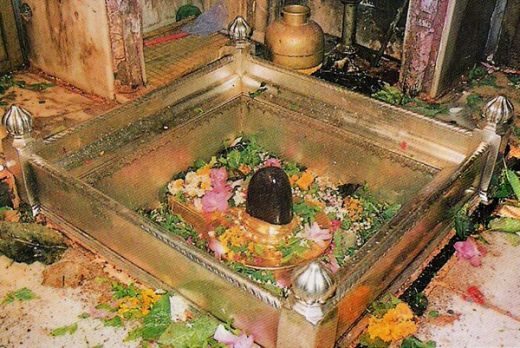
Trimbakeshwar Jyothirling

0 comments

                       Trimbakeshwar  Jyothirling

Trambakeshwar is an ancient Hindu temple in the town of Trimbak, in the Nashik District of Maharashtra, India, 28 km from the city of Nashik GPS Reference 19°55′N, 73°30′E. It is dedicated to Lord Shiva and is one of the twelve Jyotirlingas.

It is located at the source of the Godavari River, the longest river in peninsular India. The Godavari River, which is considered sacred within Hinduism, originates from Bramhagiri mountains and meets the sea near Rajahmudry. Kusavarta, a kund is considered the symbolic origin of the river Godavari, and revered by Hindus as a sacred bathing place. The current temple was built by Peshwa Balaji Baji Rao (a.k.a Nanasaheb).

Trimbakeshwar is a religious center having one of the twelve Jyotirlingas. The extraordinary feature of the Jyotirlinga located here is its three faces embodying Lord Brahma, Lord Vishnu and Lord Rudra. Due to excessive use of water, the linga has started to erode. It is said that this erosion symbolizes the eroding nature of human society. The Lingas are covered by a jeweled crown which is placed over the Gold Mask of Tridev (Brahma Vishnu Mahesh). The crown is said to be from the age of Pandavs and consists of diamonds, emeralds, and many precious stones. The crown is displayed every Monday from 4-5 pm (Shiva).

All other Jyotirlingas have Shiva as the main deity. The entire black stone temple is known for its appealing architecture and sculpture and is at the foothills of a mountain called Brahmagiri. Three sources of the Godavari originate from the Brahmagiri mountain.

Story related to Godavari river
Brahmadev worshipped God Trivikram when he came to Satya Loka (on earth) with the same holy water of the Ganges, to get the river Ganges held up by God Shankar on his head, to flow. There was a famine of 24 years and people were affected by the pangs of hunger. However, Varun - the God of Rains, pleased with Sage Gautama arranged rains every day in Gautama's Ashram (dwelling place) which was in Trimbakeshwar. Gautama used to sow rice in the surrounding fields of his Ashram in the morning, reap the crop in the afternoon and with it fed a large group of rishis, who took shelter in his Ashram on account of the famine. The blessings of the group of rishis increased the merit (Punya) of Gautama. Lord Indra's position became shaky because of his increased merit.


So Indra ordered clouds to rain all over Trimbakeshwar, so that the famine will be over and Rishis will go back and the increasing merits of Gautama will be weakened. Although the famine was over, Gautama urged the Rishis to stay back and kept on feeding them and gaining merit. Once he saw a cow grazing in the paddy field and he drove her away by throwing Darbha (sharp, pointed grass). The slender cow died by this. It was Jaya - Parvati's friend, who had taken the form of a cow. This news upset the Rishis and they refused to luncheon at his Ashram. Gautama requested Rishis to show a way out of this sin. He was advised to approach Lord Shiva and request him to release Ganges and a bath in the Ganges would set him free of his sins. Gautama then practiced penance by going to the peak of Brahmagiri. Lord Shankara was pleased by his worships and gave him the Ganges.

However, Ganges was not prepared to part with Lord Shiva, which irritated him. He made TandavNrutya (dance) on the peak of Brahmagiri and dashed his jata there. Frightened by this action, Ganges appeared on Brahmagiri. Later on Ganges appeared in the Trimbak Tirtha. Gautama praised her but she off and on appeared on the mountain at various places and disappeared in anger. Gautama could not bathe in her waters. Ganges then appeared in Gangadwar, Varaha-tirtha, Rama-Laxman tirtha, Ganga Sagar tirtha. Still Gautama could not bathe in her waters. The Gautama surrounded the river with enchanted grass and put a vow to her. The flow stopped there and the tirtha thus came to be called Kushavarta. It is from this Kushavarta that the river Godavari flows up to the sea. The sin of killing a cow by Gautama was wiped off here.

This place is famous for lots of religious rituals (vidhis). Narayan Nagbali, Kalsarpa Shanti, Tripindi vidhi are done here. Narayan Nagbali puja is performed at Trimbakeshwar only. This puja is performed in three days. This puja is performed on special dates. Some days are not suitable to perform this puja. This puja is performed for many reasons like to cure an illness, going through bad times, killing a Cobra (Nag), childless couples, financial crisis or you want to perform some religious puja to have everything.

Temple

 Trimbakeshwar town has a large number of Brahmin households and is also a centre for Vedic Gurukuls (kind of boarding school). It also has ashrams and Muths devoted to Ashtanga Yoga, the Hindu art of living.
The existing temple was built out of basalt after it was commissioned by Peshwa Nanasaheb. It so happens that the Peshwa made a bet on whether the stone surrounding the Jyotirlinga, is hollow from the inside or not. The stone was proved to be hollow, and on losing the bet, the Peshwa built a marvelous temple out of it. The Shiva deity of the temple consisted of the world famous Nassak Diamond. It was appropriated by the British in The Third Anglo-Maratha War and lies with one owner or the other ever since. The diamond presently lies with Edward J. Hand, a trucking firm executive from Greenwich, Connecticut, USA
The place is known for its scenic beauty in rainy/monsoon season and is surrounded by lush green hills untouched by pollution. Anjaneri mountain, the birthplace of Lord Hanuman, is 7 km from Trimbakeshwar.
Shri Nilambika/Dattatreya/Matamba Temple

This temple is on top of the Neel mountain. All goddesses ('Matamba','Renuka','Mananmba') came here to see 'Parashuram' when he was performing penance (tapas). After his penance he requested all goddesses to stay there and the temple was formed for these goddesses. God Dattatreya दत्तात्रेय (Shripad Shrivallabh) stayed here for some years.as well as neelkantheshwar mahadev ancient mandir is also situated right behind the Dattatrey temple. & in the feets of this Neel parvat :Annapurna ashram,renuka devi,khandoba temple is also here.

 
Read more...

Kashi Vishwanath jyothirling

0 comments
Kashi Vishwanath jyothirling

Kashi Vishwanath Temple  is one of the most famous Hindu temples dedicated to Lord Shiva and is located in Varanasi, the Holiest existing Place of Hindus, where at least once in life a Hindu is expected to do pilgrimage, and if possible, also pour the remains of cremated ancestors on the River Ganges. It is in the state of Uttar Pradesh, India. The temple stands on the western bank of the holy river Ganges, and is one of the twelve Jyotirlingas, the holiest of Shiva temples. The main deity is known by the name Vishwanatha or Vishweshwara meaning the Ruler of the universe. The temple town claims to be the oldest living city in the world, with 3500 years of documented history is also called Kashi and hence the temple is popularly called as Kashi Vishwanath Temple.

The temple has been referred to in Hindu theology for a very long time and as a central part of worship in the Shaiva philosophy. The temple has been destroyed and rebuilt a number of times. The Gyanvapi Mosque, which is adjacent to the temple, is the original site of the temple. The current structure was built by the Maratha monarch, Ahilya Bai Holkar of Indore in 1780. Since 1983, the temple is being managed by Govt. of Uttar Pradesh. During the religious occasion of Shivratri, Kashi Naresh (King of Kashi) is the chief officiating priest and no other person or priest is allowed to enter the sanctum sanctorum. It is only after he performs his religious functions that others are allowed to enter.

The temple structure

The original holy well - Gyanvapi in between the temple & Gyanvapi Mosque The temple complex consists of a series of smaller shrines, located in a small lane called the Vishwanatha Galli, near the river. The linga of the main deity at the shrine is 60 cm tall and 90 cm in circumference housed in a silver altar. There are small temples for Kaalbhairav, Dhandapani, Avimukteshwara, Vishnu, Vinayaka, Sanishwara, Virupaksha and Virupaksh Gauri in the complex. There is a small well in the temple called the Jnana Vapi (the wisdom well) and it is believed that the Jytorlinga was hidden in the well to protect it at the time of invasion. It is said that the main priest of the temple jumped in the well with the Shiv Ling in order to protect the (Jyoti-r) Ling from invaders.
The Kashi Vishwanath temple receives around 3000 visitors every day. At certain occasions, the numbers reach 100,000.

Importance of the temple

The temple is widely recognized as one of the most important places of worship in Hindu religion and most of the leading Hindu saints, including Adi Sankaracharya, Ramakrishna Paramhansa, Swami Vivekananda, Goswami Tulsidas, Swami Dayananda Saraswati, Gurunanak have visited this site. A visit to the temple and a bath in the river Ganges is one of many methods believed to lead one on a path to Moksha (liberation). Thus, people from all over the nation, try to visit the place at least once in their lifetime. There is also a tradition that one should give up at least one desire after a pilgrimage the temple, and the pilgrimage would also include a visit to the temple at Rameswaram in South India, where people take the water samples of the Ganges to perform prayer at the temple and bring back the sand from near that temple. Due to the immense popularity and holiness of this temple, hundreds of temples across the nation have been built with the same style and architecture. Many legends establish that the true devotee achieves freedom from death and samsara by worship of Shiva. Shiva's devotees on death are directly taken to Mount Kailash by his messengers to his abode and not to Yama. The superiority of Shiva and his victory over his own nature - Shiva is himself identified with death - is also ascertained. There is a popular belief that Shiva himself blows the mantra of salvation into the ears of people who choose to end their lives at the Vishwanath temple.
History
A Shiva temple has been mentioned in Puranas including Kashi Khanda (section) of Skanda Purana.In 490 AD, the Kashi Vishwanath Temple was built. In 11th Century AD, Hari Chandra constructed a temple. Muhammad Ghori destroyed it along with other temples of Varanasi during his raid in 1194. Reconstruction of the temple started soon after. This was demolished by Qutb-ud-din Aibak. After Aibak's death the temple was again rebuilt by many Hindu emperors. In 1351 it was destroyed again by Firuz Shah Tughlaq. The temple was rebuilt in 1585 by Todar Mal, the Revenue Minister of Akbar's Court. Aurangzeb ordered its demolition in 1669 and constructed Gyanvapi Mosque, which still exists alongside the temple. Traces of the old temple can be seen behind the mosque. It is said that the Shiv-Linga was thrown in the well and the original Shiv-linga now resides there. The current temple was built by Ahilya Bai Holkar, the Hindu Maratha queen of Malwa kingdom, in 1780. Many noble families from various ancestral kingdoms (states) of India and their prior establishments, make generous contributions for operations of the temple.
In popular culture

• In Sid Meier's Civilization IV, the Kashi Vishwanath temple is a religious complex that can be built by a Great Prophet, thus establishing a holy shrine in the Hindu holy city.
See also
• Shivaratri
• Vibhuti
• Pradosha
• Conversion of non-Muslim places of worship into mosques
Read more...

Bhimashankar Jyothirling

0 comments
Bhimashankar Temple 

Bhimashankar Temple is a Jyotirlinga shrine located 50 km northwest of Khed, near Pune, in India. It is located 127 km from Shivaji Nagar (Pune) in the Ghat region of the Sahyadri hills. Bhimashankar is also the source of the river Bhima, which flows southeast and merges with the Krishna river near Raichur. The other Jyotirlinga shrines in Maharashtra are Trimbakeshwara near Nashik and Grishneshwar near Ellora around Aurangabad

The Bhimashankara temple is a composite of old and the new structures in the Nagara style of architecture. It shows the excellency of the skills achieved by ancient Vishwakarma sculptors. It is a modest yet graceful temple and it dates back to 13th century and the sabhamandap developed in 18th century by Nana Phadnavis. The shikhara was built by Nana Phadnavis. The great Maratha ruler Shivaji is said to have made endowments to this temple to facilitate worship services. As with other Shiva temples in this area, the sanctum is at a lower level. 

Although the structure here is fairly new, the shrine Bhimashankaram (and the Bhimarathi river) have been referred to in literature dating back to the 13th century CE. Saint Jñāneshwar is said to have visited Tryambakeshwar and Bhimashankar. A unique bell (Roman style) can be seen in front of the temple which was presented by Chimaji Appa (Brother of Bajirao Peshwa I and uncle of Nanasaheb Peshwa). Chimaji Appa collected two large bells after he won in war against the Portuguese from Vasai Fort. He offered one here at Bhimashankar and the other at Menovali near Wai in front of a Shiva Temple on the banks of the Krishna river.

Story & History

Eons ago in the dense forests of Dakini, on the lofty ranges of the Sahaydris lived an evil Asura by the name Bhima with his mother Karkati. Compassion and kindness shivered in the presence of Bhima. The divine and the mortals were scared of him alike. But he was confronted by certain questions about his own existence which continuously tormented him.

When Bhima could no longer sustain his agony and curiosity, he asked his mother to unveil the mysteries of his life. He urged his mother to tell him who his father was and why he had abandoned them in the wilderness of the forest. After much hesitation and with a lingering fear, Karkati his mother, revealed to him that he was the son of the mighty Kumbhakarna, the younger brother of the Lankadheeswara  the mighty all powerful King Ravana of Lanka.

Lord Vishnu in his incarnation as Lord Rama annihilated Kumbhakarna. Karkati told Bhima, that his father was killed by Ram in the great war. This infuriated Bhima and he vowed to avenge Lord Vishnu. To achieve this he embarked on a severe penance to please Lord Brahma.
The compassionate creator was pleased by the dedicated devotee and granted him immense prowess. This was a terrible mistake. The evil tyrant caused havoc in the three worlds. He defeated King Indra and conquered the heavens. He also defeated a staunch devotee of Lord Shiva – Kamarupeshwar, and put him in the dungeons.

He started torturing Rishis and Sadhus. All this angered the Gods. They all along with Lord Brahma beseeched Lord Shiva to come to their rescue. Lord Shiva consoled the Gods and agreed to rescue them from the tyrant. On the other hand Bhima insisted and ordered Kamarupeshwar to worship him instead of Lord Shiva.

When Kamarupeshwar denied, the tyrant Bhima raised his sword to strike the Shiva Linga, to which Kamarupeshwar was doing abhishekam and pooja. As soon as Bhima managed to raise his sword, Lord Shiva appeared before him in all his magnificence.

Then the terrible war began. The holy sage Narada appeared and requested Lord Shiva to put an end to this war. It was then that Lord Shiva reduced the evil demon to ashes and thus concluded the saga of tyranny. All the Gods and the holy sages present there requested Lord Shiva to make this place his abode. Lord Shiva thus manifested himself in the form of the Bhimashankar Jyotirlingam.
It is believed that the sweat that poured forth from Lord Shiva's body after the battle formed the Bhimarathi River.

Bhimashankar temple

Although the present structure of the temple appears to be of comparatively recent origins, the shrine Bhimashankaram (and the Bhimarathi river) have been referred to in literature dating back to the 13th century. Built in the Nagara style of architecture, this temple is a modest yet graceful temple and dates back to the 18th century. One can also find borrowed influences from the Indo Aryan style of architecture.

It is believed that the ancient shrine was erected over a Swayambhu Lingam (that is the self emanated Shiva Lingam). It can be seen in the temple that the Lingam is exactly at the centre of the floor of the Garbagriham (the Sanctum Sanctorum). Intricate carvings of divinities interspersed with human figurines adorn the pillars and the doorframes of the temple. Scenes from mythology find itself captured in these magnificent carvings.

Within the temple precincts there is also a small shrine dedicated to Lord Shani Mahatma (also called Shaneeswara). The image of Nandi Lord Shiva's vahanam is installed as is the case with all the Siva Temples, just at the entrance of the temple.

This temple is closely associated with the legend of Shiva slaying the demon Tripurasura associated with the invincible flying citadels Tripuras. Shiva is said to have taken abode in the 'Bhima Shankara' form, upon the request of the Gods, on the crest of the Sahyadri hills, and the sweat that poured forth from his body after the battle is said to have formed the Bhimarathi river.

The Gopura-shikharam of the temple was built by Nana Phadnavis. The great Maratha ruler Shivaji is also said to have made endowments to this temple to facilitate the carrying out, of worship services. As with other Shiva temples in this area, the sanctum is at a lower level. The 'Shani temple' is located inside the main complex of the temple of Bhimashankar.

Between the two pillars outside the 'Shani' temple, one comes across an ancient huge Portuguese bell. Behind the temple, there is a small pathway that leads us to the banks of a river. "Stepping out from the Temple one is awed with a bewitching view of the virgin wilderness occasionally interrupted by the glimpses of the majestic forts on the surrounding mountains greets us."

History unveils itself in the peaks of the Sahayadris. Bhimashankar – a place where spiritual splendor merges with nature's magnificence is definitely a pilgrim's paradise. There are other temples and shrines, near the main temple. There is a shrine to Kamalaja near the Bhimashankara temple. Kamalaja is an incarnation of Parvati, who aided Shiva in his battle against Tripuraasura. Kamalajaa was worshipped with offerings of lotus flowers by Bhrama.

There is a shrine for Siva Ganams, Shaakini and Daakini who assisted Shiva in the battle against the demon. Kaushika Maha Muni is said to have done 'Tapas' (penance) there. The place where he bathed is called Mokshakund thirtham, which is located behind the Bhimashankara temple. There are also the Sarvathirtha, the Kusharanya thirtha where the Bhima river begins to flow eastward, and the Jyanakund.

Surroundings

There are Buddha style carvings of Amba-Ambika, Bhootling and Bhimashankar in the hills of Manmaad near Bhimashankar at a height of 1034 metres. A big bell in Hemadpanthi structure built by Nana Phadanavis is a feature of Bhimashankar. Places that can be visited in are Hanuman Lake, Gupt Bhimashankar, Origin of River Bhima, Nag Phani, Bombay Point, Sakshi Vinayak and a lot more. Bhimashankar is a conserve red forest area and wildlife sanctuary where a variety of birds, animals, flowers, plants can be seen. A rare animal "Shekru" can be found in deep woods. Bhimashankar is worth visiting for jungle lovers and trekkers as well as for pilgrims. This temple is very famous in Pune and people from all around the world come to visit this temple.

Other temples and shrines

There is a shrine to Kamalaja near the Bhimashankara temple. Kamalaja is an incarnation of Parvati, who aided Shiva in his battle against Tripuraasura. Kamalaja was worshiped with offerings of lotus flowers by Brahma. Shaakini and Daakini the Shivaganas who helped Shiva in the battle against the demon are also honored and worshiped here.

The Mokshakund thirtha is behind the Bhimashankara temple, and it is associated with the rishi Kaushika. There are also the Sarvathirtha, the Kusharanya thirtha where the Bhima river begins to flow eastward, and the Jyanakund.

Worship

Bhimashankar is an ancient shrine, one of the 12 Jyotirlingas of Shiva. Far away from the tumult of the urban life, peeping through the white fleecy clouds, Bhimashankar can be termed a pilgrim paradise. The dense forests surrounding the high ranges are an abode for rare species of flora and fauna. Situated at the extreme end of the Sahyadri Ranges, this place gives a wonderful view of the world around the rivers, and hill stations.

Bhimashankar is the source of the Bhima River, which flows southeast and merges with the Krishna River. With endless stretches of virgin forests, lofty peaks that seem to reach out to the heavens, and the whispering waters of the Bhima River, Bhimashankar is definitely one of God's choicest creations.
It seems as if Lord Shiva is keeping a silent vigil over the majestic ranges of the Sahyadris. The serenity interrupted only by the silent murmuring of the cool breeze and the occasional chirping of birds, Bhimashankar is a trekker's delight and a traveler's sojourn.

Transportation

Bhimashankar is approximately 127 km from Pune and 200 km from Mumbai. The route to Bhimashankar is via Manchar. The second route is from Rajgurunagar via Wada. One can go to this place, full of natural beauty and lovely scenery, and be back to Pune in one day. Bhimashankar is a good paradise for nature lovers, trekkers, jungle lovers and bird watchers. The best seasons to go are monsoon and winter.

Bhimashankar is 74 miles or 127 km from Pune by road. State buses go there from Pune daily, with more than five hours of bus journey. During the Mahashivaratri festival, when there is a great fair at the temple, buses ply to and fro daily. It is accessible from Karjat on the Pune — Mumbai section of the Central railway. There is no proper road from Karjat to Bhimashankar and only the devotees who wish to go to the temple on foot during festivals use this road.

If coming from Aurangabad or Ahmednagar, move towards Alephata which is 30 km from Nagar. Then go to Manchar which is 60 km from Alephata. Take right from Manchar and after 59 km to reach Bhimashankar (Aurangabad to Ahmednagar is 112 km).
Another root is via Sangamner, which lies on Nashik-Pune Road; from Sangamner go to Manchar and then follow the same route towards Bhimashankar, which is 59 km.
From Pune ST buses are available from Shivaji Nagar Pune to Bhimashankar at 5:30 in the morning to 2:00 pm and a ticket is approximately 91/-. From Pune -> Rajguru Nagar -> Chas Kaman Dam -> Wada -> Bhimashakar; from Pune -> Rajguru Nagar -> Manchar -> Ghodegoan -> Bhimashakar; from Mumbai ->Chakan [i.e., exterior part of Pune] -> Rajguru Nagar(Khed) -> Manchar -> Ghodegoan -> Bhimashakar.

From Mumbai

If coming from Mumbai, take Pune road. About 31.02 km from Deonar traffic junction lies the Mumbai Pune Expressway (NH-4) after crossing Navi Mumbai and Panvel. After 52 km from Panvel is Lonavala and 50 km from there is on NH-4 is Wadgaon. At Wadgaon, turn left on State Highway towards Chakan which is about 12 km. At Chakan, take NH 50 towards Manchar which is around 65 km to Bhimashankar. From Mumbai direct State Transport buses are available from Mumbai Central. The morning bus leaves Mumbai central around 6.00 am and the last bus is of 10.30 pm. Traveling from Mumbai to Bhimashankar takes 6 hours by private car and state transport vehicles takes 7 hours.
From Pune
If starting from Pune, drive along the Pune-Nasik highway and turn off at the road leading to Bhimashankar. The mountain road is quite a steep climb. The distance is about 160 km from Pune.
Government MSRTC buses (non luxury) run from Pune to Bhimashankar every 30 minutes from 5:30 am till 4:00 pm

Accommodation

Pilgrims usually stay here for three days. The local upajjhayas (priests) make arrangements for the lodging and boarding of pilgrims at a small cost. Visitors are accommodated in either temporary hutments or in dharamshalas near the village. A new dharamshala is under construction. There are several hotels near Bhimashankar. Places like Shinoli and Ghodegaon are good for staying near Bhimashankar. Accommodation at Bhimashankar mainly comprises two bungalows (with a capacity of 8 beds) and tents.

Visit times

The best time to visit is between August and February. Though any time of the year is good to visit Bhimashankar, it is better to avoid visiting during summer. Similarly during monsoon unless one likes trekking, it is better to avoid. That leaves the best period to seven months between August and February.

City details

The Khed/Rajgurunagar is the administrative taluka in Pune district, comprising the upper reaches of the Ghod and Bhima rivers. The most famous place in this division is Bhimashankar Temple, located in the village of Bhorgiri 50 km in the north west of Khed. It is located 127 km away from Pune in the Ghat region of the Sahyadri hills. It is also the location of the Bhimashankar Wildlife Sanctuary, a popular weekend getaway from Mumbai and Pune. It is about 130 km from Pune by Road and 62 km away from Manchar. Bhimashankar comes under Pune District.

Pooja Details

Three worship services are offered every day. Mahashivratri is a season of great festivity here.
Timings:
Morning - 4:30 am
Aarti - 5:05 am
Normal Darshans - 5:15 am to 11:30 am.
No Abhishekam between - 11:30 am to 11:50 am.
Maha Puja - 12 pm.
Maha Nivedhyam - 12:30 pm.
Abhishekam and Normal Puja - 12:30 pm to 2:30 pm.
Shringar Puja - 2:45 pm to 3:15 pm.
Aarti - 3:15 pm to 3:30 pm
Shringar Darshan - 3:30 pm to 7:30 pm
(Except Pradosham on Monday or Amavasya or Grahan or Maha Shiv Ratri. Kartihik Month, Shravan Month — No Mukut and no Shringar Darshans).
Rudrasamhita sloka in its reference to Bhimashankar says, Daakine Bhimashankaram. There is also a Bhimashankar temple at Bhimapur hill near Guwahati in Assam where legend holds that a demon by name Bhima who inflicted havoc upon the beings in the area, was slain by Shiva, as he tried to kill a king enaged in Shiva worship.
This is not to be confused with the legend Mruthumjaya Lingam, where Shiva emerged from a Shivalingam to vanquish Yama the Lord of death. The Shiva Purana and the Koti Rudra Samhita refer to Bhimashankar temple in the Kamarupa country. However there is also a reference to Mount Sahya, where it is stated that Shiva — Bhimashankara appeared on the Sahayadris.

Three worship services are offered each day. Mahashivratri is a season of great festivity here
Read more...

KEDARANATH JYOTHIRLING

0 comments

Kedarnath Mandir 

Kedarnath Mandir  is one of the holiest Hindu temples dedicated to Lord Shiva and is located atop the Garhwal Himalayan range near the Mandakini river in Kedarnath, Uttarakhand in India. Due to extreme weather conditions, the temple is open only between the end of April to Kartik Purnima (the autumn full moon). During the winters, the murtis (idols) from Kedarnath temple are brought to Ukhimath and worshipped there for six months. In this region Lord Shiva is worshipped as Kedarnath, the 'Lord of Kedar Khand', the historical name of the region. This temple is a Paadal Petra Sthalam (the 275 Holy Abodes of Shiva on the continent), praised by the Tamil Nayanars saints in the 6th-9th century CE.
The temple is not directly accessible by road and has to be reached by a 14 km uphill trek from Gaurikund . The temple is believed to have been built by Adi Sankaracharya and is one of the twelve Jyotirlingas, the holiest Hindu shrines of Shiva. The older temple existed from the times of Mahabharata, when the Pandavas are supposed to have pleased Shiva by doing penance in Kedarnath. The temple is also one of the four major sites in India's Chota Char Dham pilgrimage of Northern Himalayas.

According to the Puranas  

As per Shiv Mahapuran, once Brahma (the Hindu God of creation) and Vishnu (the Hindu God of saving) had an argument in terms of supremacy of creation. To test them, Shiva pierced the three worlds as a huge endless pillar of light, the jyotirlinga. Vishnu and Brahma split their ways to downwards and upwards respectively to find the end of the light in either directions. Brahma lied that he found out the end, while Vishnu conceded his defeat. Shiva appeared as a second pillar of light and cursed Brahma that he would have no place in ceremonies while Vishnu would be worshipped till the end of eternity. The jyotirlinga is the supreme partless reality, out of which Shiva partly appears. The jyothirlinga shrines, thus are places where Shiva appeared as a fiery column of light.Originally there were believed to be 64 jyothirlingas while 12 of them are considered to be very auspicious and holy. Each of the twelve jyothirlinga sites take the name of the presiding deity - each considered different manifestation of Shiva. At all these sites, the primary image is lingam representing the beginningless and endless Stambha pillar, symbolizing the infinite nature of Shiva. The twelve jyothirlinga are Somnath in Gujarat, Mallikarjuna at Srisailam in Andra Pradesh, Mahakaleswar at Ujjain in Madhya Pradesh, Omkareshwar in Madhya Pradesh, Kedarnath in Himalayas, Bhimashankar in Maharastra, Viswanath at Varanasi in Uttar Pradesh, Triambakeshwar in Maharastra, Vaijanath at [[Parali|Parali] in maharashtra, Hingoli at Hingoli in Maharashtra, Rameshwar at Rameswaram in Tamil Nadu and Grishneshwar at Aurangabad in Maharastra.

Temple and significance

The actual temple is an impressive stone edifice of unknown date. During the war between the Kauravas and Pandavas, the kith and kin of the Pandavas were killed; in order to absolve themselves of this sin, the Pandavas undertook a pilgrimage. But Lord Vishweshwara was away in Kailasa in the Himalayas. On learning this, the Pandavas left Kashi. They reached the Himalayas via Hardwar. They saw Lord Shankar from a distance. But Lord Shankara hid from them. Then Dharmaraj said: “Oh, Lord, You have hidden yourself from our sight because we have sinned. But, we will seek You out somehow. Only after we take your Darshan would our sins be washed away. This place, where You have hidden Yourself will be known as Guptkashi and become a famous shrine.” From Guptakashi (Rudraprayag), the Pandavas went ahead till they reached Gaurikund in the Himalayas valleys. They wandered there in search of Lord Shankara. While doing so Nakul and Sahadev found a he-buffalo. It was unique to look at.

Then! Bheema went after the buffalo with his mace. The buffalo was clever and Bheema could not catch it. But Bheema managed to hit the buffalo with his mace. The buffalo had its face hidden in a crevice-in the earth. Bheema started to pull it by its tail. In this tug-of war, the face of the buffalo went straight to Nepal, leaving its hind part in Kedar. The face of the buffalo is Doleshwar Mahadev located in Sipatol, Bhaktapur, Nepal.
On this hind part of Mahesha, a glorious JyotirLinga appeared. Lord Shankara appeared from this great light. He appeared before the pandavas. By getting a Darshan of Lord Shankar, the pandavas were absolved of their sins. The Lord told the Pandavas, “From now on, I will remain here as a triangular shaped JyotirLinga. By taking a Darshan of Kedarnath, devotees would attain piety”. Near Kedarnath, there are many symbols of the Pandavas Raja Pandu died here, when he tried to make love to Madri. This place is famous as Pandukeshwar. The tribals here perform a dance called “Pandav Nritya”. The mountain top where the Pandavas went to Swarga, is known as “Swargarohini”. When Darmaraja was leaving for Swarga, one of his fingers fell on the earth. At that place, Dharmaraj installed a Shiva Linga, which is the size of the thumb.

To gain Mashisharupa, Shankara and Bheema fought with maces. Bheema was struck with remorse. He started to massage Lord Shankara’s body with ghee. In memory of this event, even today, this triangular Shiva JyotirLinga is massaged with ghee. Shankara is worshipped here in this manner. Water and Bel leaves are used for worship.

When Nar-Narayan went to Badrika village and started the worship of Parthiva, Shiva appeared before them. A few days later, a pleased Shiva granted them some boons. Nar-narayan wished that for the welfare of the humanity, Shiva should remain there in his original form. Granting their wish, in the snow-clad Himalayas, in a place called Kedar, Mahesha himself stayed there as a Jyoti. Here, He is known as Kedareshwara.

By visiting Kedareshwar, sorrows do not come even in dreams. By worshipping Shambara (Kedareshwar) Pandavas were rid of all their sorrows. Badri-Keshwar’s darshan rids one of the material ties. Whoever gives Dan (alms) at Kedareshwar, just gets assimilated into Shivaroopa.

Srimat Shankaracharya praised Lord Shiva thus:
mahAdripArshve cha taTe ramantaM sampUjyamAnaM satataM munIndraiH | surAsurairyaxa mahoragADhyaiH kedAramIshaM shivamekamIDe || Meaning: Oh Lord, who resides in the great heights of Himalayas, oh Lord, thou, who art worshipped forever by saints, Hermits, Demons, Gods, Yakshas and Maha Nag (giant snakes), I bow and offer millions of Pranams. As a matter of fact, as one enters the main temple, the first hall contains statues of the five Pandava brothers, Lord Krishna, Nandi, the vehicle of Shiva and Virabhadra, one of the greatest guards of Shiva. An unusual feature of the temple is the head of a man carved in the triangular stone fascia of the temple. Such a head is seen carved in another temple nearby constructed on the site where the marriage of Shiva and Parvati was held. No specific family of pujaris supervise rituals at Kedarnath, where the focus is on veneration of the stone lingam that rests in the inner sanctum of the temple.

The head priest (Rawal) of the Kedarnath temple belongs to the Veerashaiva community from Karnataka. However, unlike in Badrinath temple, the Rawal of Kedarnath temple does not perform the pujas. The pujas are carried out by Rawal's assistants on his instructions. The Rawal moves along with the deity to Ukhimath during the winter season. The present Rawal of Kedarnath temple is Shri Bhima Shankar Ling Shivacharya who is one of the five Jagadgurus of (Shakti Vishistadwita philosophy) veerashaiva.
               
Read more...

Omkareshwar Jyotirlinga

0 comments


Omkareshwar Jyotirlinga

 Omkareshwar is a Hindu temple dedicated to God Shiva. It is one of the 12 revered Jyotirlinga shrines of Shiva. It is on an island called Mandhata or Shivapuri in the Narmada river; the shape of the island is said to be like the Hindu symbol. There are two temples here, one to Omkareshwar (whose name means "Lord of Omkaara or the Lord of the Om Sound") and one to Amareshwar (whose name means "Immortal lord" or "lord of the Immortals or Devas"). But as per the sloka on dwadash jyotirligam, Mamleshwar is the jyotirling, which is on other side of Narmada river

History of Omkareshwar

Omkareshwar Jyotirlinga also has its own history and stories.Three of them are prominent. The first story is about Vindhya Parvat (Mount). Once upon a time Narada (son of Lord Brahma), known for his non-stop cosmic travel, visited Vindhya parvat. In his spicy way Narad told Vindhya Parvat about the greatness of Mount Meru. This made Vindhya jealous of Meru and he decided to be bigger than Meru. Vindhya started worship of Lord Shiva to become greater than Meru. Vindhya Parvat practiced severe penance and worshipped parthivlinga (A linga made from physical material) along with Lord Omkareshwar for nearly six months. As a result Lord Shiva was pleased and blessed him with his desired boon. On a request of all the gods and the sages Lord Shiva made two parts of the lingas. One half is called Omkareshwara and the other Mamaleshwar or Amareshwar. Lord Shiva gave the boon of growing, but took a promise that Vindhya will never be a problem to Shiva's devotees. Vindhya began to grow, but did not keep his promise. It even obstructed the sun and the moon. All deities approached sage Agastya for help. Agastya along with his wife came to Vindhya, and convinced him that he would not grow until the sage and his wife returned. They never returned and Vindhya is there as it was when they left. The sage and his wife stayed in Srisailam which is regarded as Dakshina Kashi and one of the Dwadash Jyotirlinga.

The second story relates to Mandhata and his son's penance. King Mandhata of Ishvaku clan (an ancestor of Lord Ram) worshipped Lord Shiva here till the Lord manifested himself as a Jyotirlinga. Some scholars also narrate the story about Mandhata's sons-Ambarish and Mucchkund, who had practiced severe penance and austerities here and pleased Lord Shiva. Because of this the mountain is named Mandhata.
 
The third story from Hindu scriptures says that once upon a time there was a great war between Devas and Danavas(demon), in which Danavas won. This was a major setback for Devas and hence Devas prayed to Lord Shiva. Pleased with their prayer, Lord Shiva emerged in the form of Omkareshwar Jyotirlinga and defeated Danavas.
Omkareshwar under lights

Location
It is situated in the Khandwa district of Madhya Pradeshstate in India. It is about 12 miles (20 km) from Mortakka in Madhya Pradesh.
Omkareshwar is formed by the sacred river Narmada. This is one of the most sacred of rivers in India and is now home to one of the world's biggest dam projects.

Transport
There are steamboats across the Narmada river and also two connecting bridges to reach the temple.
Air : The Airports close to Omkareshwar are at Indore (77 km) and Ujjain (133 km).
Rail : Nearest Railway Station is at Omkareshwar Road (12 km) on the Ratlam-Khandwa section of the Western Railway which is not a mainline. The other nearest railway station connected to Delhi and Mumbai is at Indore (77 km).
Road : Omkareshwar is connected to major towns and cities of Madhya Pradesh. There are regular bus services from Ujjain (133 km), Indore (77 km), Khandwa (61 km.) and Omkareshwar Road (12 km). By bus, it takes 2.5 hrs from Khandwa railway station to Omkareshwar.
While traveling from Khandwa to Omkareshwar, on the left side of road in the outskirts of Khandwa you can see the memorial to the celebrated singer, Kishore Kumar.
Read more...